What is Ganesh Chaturthi?
It is a Hindu festival honoring Lord Ganesha, who is revered as the remover of obstacles and a symbol of wisdom, auspicious beginnings and discernment.
Explore the stories, rituals, recipes, symbolism, sustainable celebration ideas and public traditions that make Ganesh Chaturthi one of India’s most beloved festivals.
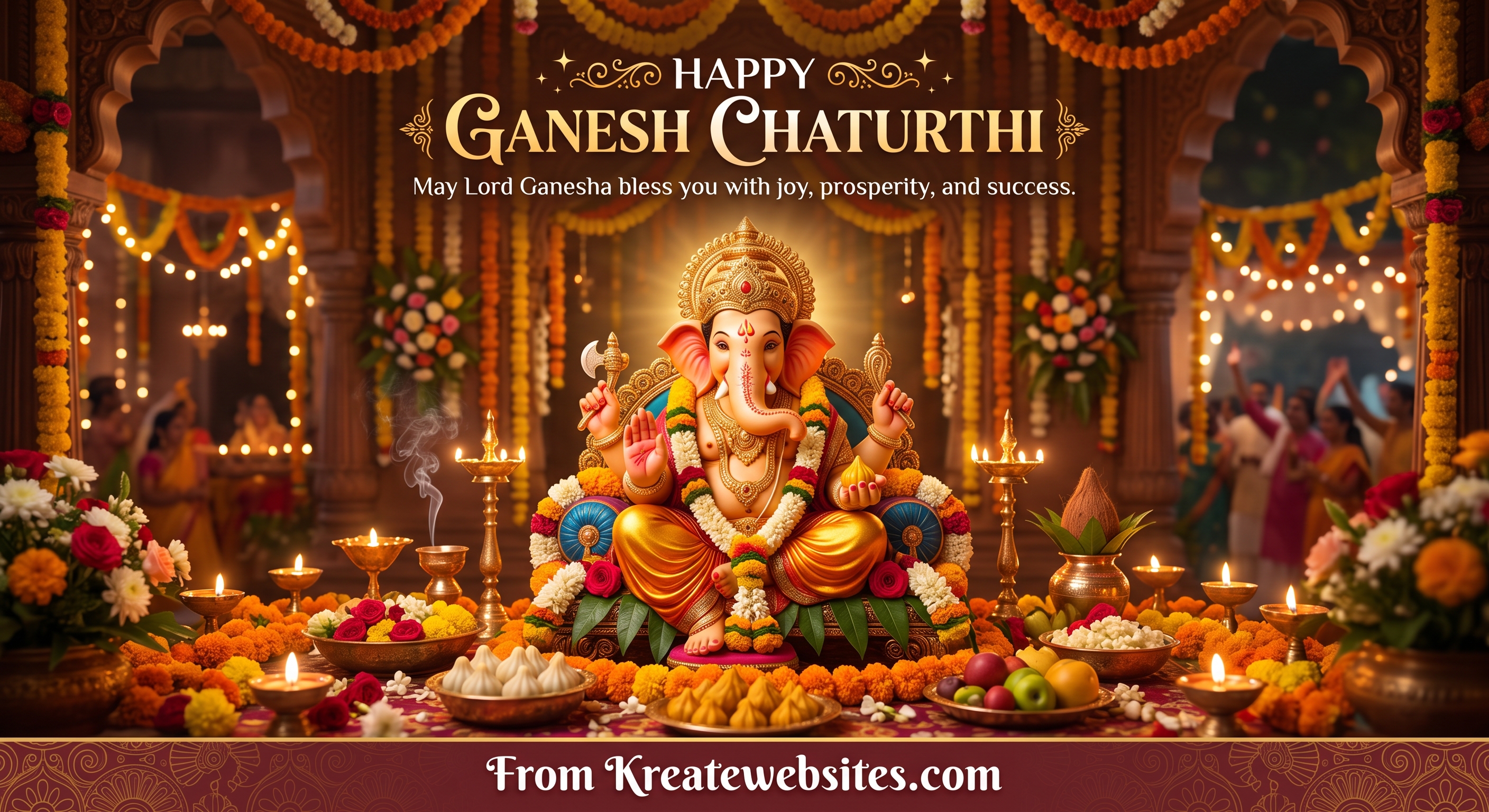
Festival Overview
Ganesh Chaturthi honors Lord Ganesha, the elephant-headed deity associated with wisdom, discernment, prosperity and new beginnings. Across homes and community pandals, devotees welcome Ganesha with prayer, flowers, lamps, music and food offerings before eventually bidding farewell through visarjan.
The festival is simultaneously intimate and public. A family may create a small altar for a clay murti at home, while an entire neighborhood may organize cultural programs around a community pandal. In Maharashtra, the public festival became especially influential in the late nineteenth century when Lokmanya Tilak helped popularize large community celebrations as spaces for cultural unity and civic participation.
Beyond ritual, the festival invites reflection on several enduring ideas: beginning well, listening carefully, acting with wisdom, enjoying prosperity without attachment, caring for the natural world and accepting that every form eventually returns to its source.
20 Detailed Articles
Choose a topic below or move through the series from mythology and symbolism to sustainable celebration, food, travel, ritual and the deeper meaning of visarjan.
Follow the birth stories of Ganesha and the rise of public Ganeshotsav through Lokmanya Tilak’s late nineteenth-century movement.
Explore traditional interpretations of the elephant head, large ears, pot belly, broken tusk and mouse mount.
Understand the story behind the custom of avoiding the moon on Chaturthi night and its association with false accusation.
Discover why the modak became so closely connected with Ganesha in devotional storytelling and festive worship.
A beginner-friendly approach to shaping a simple biodegradable murti with natural clay.
Learn how seed-embedded clay idols turn the conclusion of the festival into the beginning of new plant life.
Use banana leaves, flowers, bamboo, reusable fabric and everyday materials to create an elegant low-waste setting.
Examine why Plaster of Paris can create immersion challenges and what families and communities can do differently.
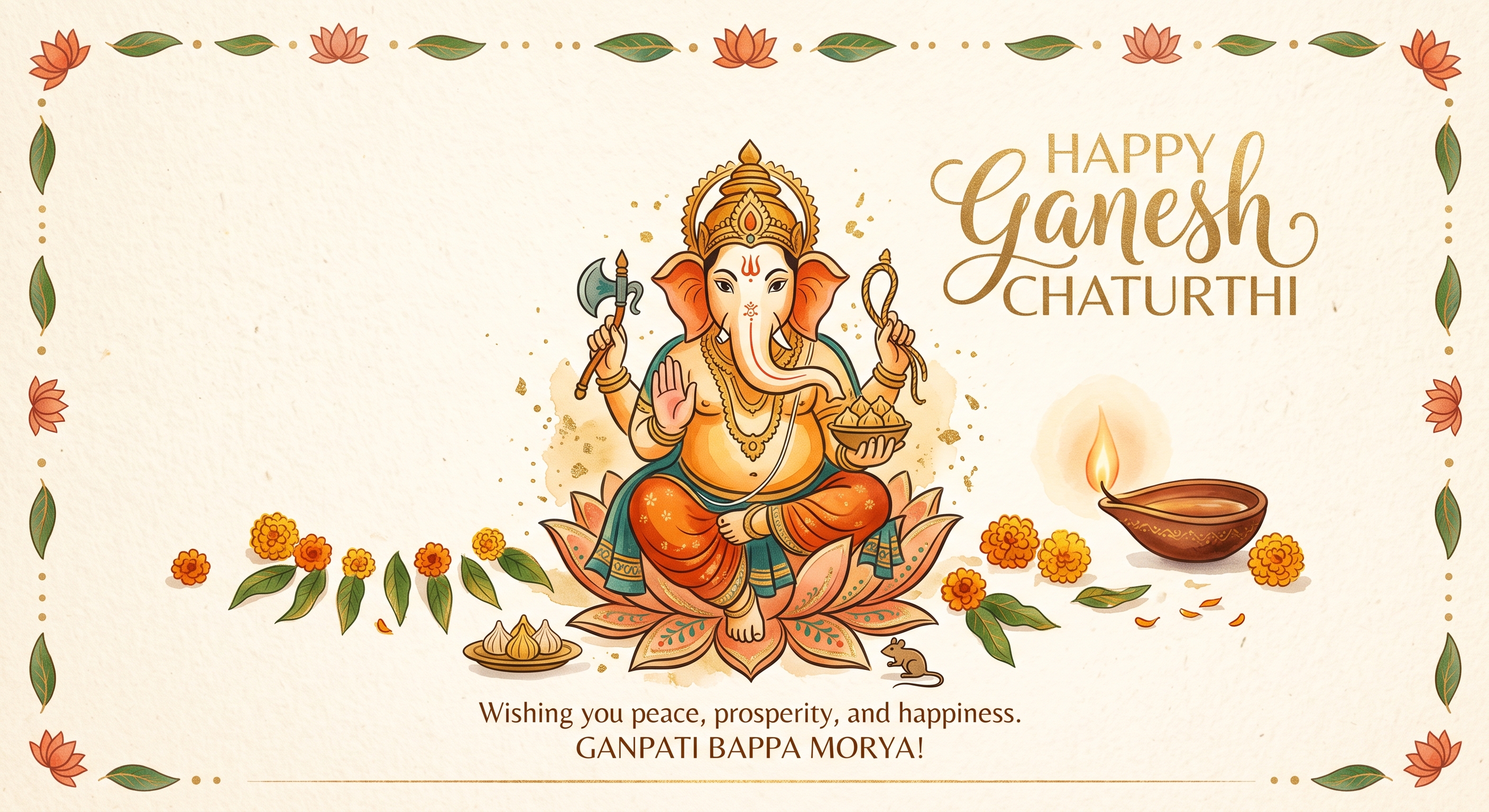
Tradition in Daily Life
Ganesh Chaturthi can be grand or simple. The heart of the celebration lies in intentional welcome: a clean space, a thoughtfully placed murti, sincere prayer, shared food, music, hospitality and a respectful farewell.
The guides below focus on the practical side of the festival: what to cook, how to decorate, where to visit and how to organize celebrations that work in contemporary homes and communities.
Make classic Maharashtrian steamed rice-flour modaks with a coconut-jaggery filling.
Plan ten days of offerings with a mix of familiar sweets, festive breads, savory preparations and regional favorites.
Try festive sweets built around dates, nuts, coconut and other naturally sweet ingredients.
Compare festive food traditions from Maharashtra, Karnataka, Andhra Pradesh and Tamil Nadu.
Create a warm, uncluttered home altar with compact backdrops, drapes, lights and a few carefully chosen accents.
Plan a Ganeshotsav visit around famous public pandals, including Lalbaugcha Raja, while allowing for crowds and queues.
Explore floral, geometric and Ganesha-inspired rangoli approaches for entrances, mandaps and prayer spaces.
A practical framework for housing societies covering roles, schedules, safety, cultural programs, waste and eco-visarjan.
Prepare a home puja with a practical samagri list, sequence of worship and simple daily aarti guidance.
Learn the meaning and devotional context of widely recited Ganesha prayers such as Vakratunda Mahakaya.
Reflect on immersion as a symbol of impermanence, detachment, renewal and the return of form to the formless.
See how overseas Indian communities adapt timing, spaces, materials and immersion while preserving the festival’s core traditions.
Festival Journey
Choose the murti, clean the space, plan décor and gather puja samagri.
Install the murti respectfully, offer prayers, flowers, lamps and naivedya.
Share meals, aarti, music, visits, community programs and acts of generosity.
Conclude with gratitude and an environmentally responsible visarjan or symbolic farewell.
FAQ
It is a Hindu festival honoring Lord Ganesha, who is revered as the remover of obstacles and a symbol of wisdom, auspicious beginnings and discernment.
Modaks are closely associated with Ganesha in devotional tradition and are a widely loved naivedya during the festival, especially in Maharashtra.
The farewell and immersion are often understood as a reminder that physical forms are temporary, encouraging gratitude, non-attachment and renewal.
Choose natural clay idols, reusable décor, low-waste offerings, natural materials and an immersion method appropriate to local environmental rules and facilities.