Contents: 20 topics
- Gaya Shraddha and Pind Daan: Complete Pilgrimage Guide
- Why Is Gaya Important for Pind Daan and Ancestor Rituals?
- Vishnupad Temple and Pind Daan in Gaya: Cultural Guide
- Phalgu River and Shraddha Traditions in Gaya
- Akshay Vat in Gaya: Significance in Ancestral Ritual Traditions
- Haridwar Shraddha and Tarpan: Complete Pilgrimage Guide
- Har Ki Pauri and Ancestor Remembrance Rituals in Haridwar
- Varanasi Shraddha and Pind Daan: Visitor and Ritual Guide
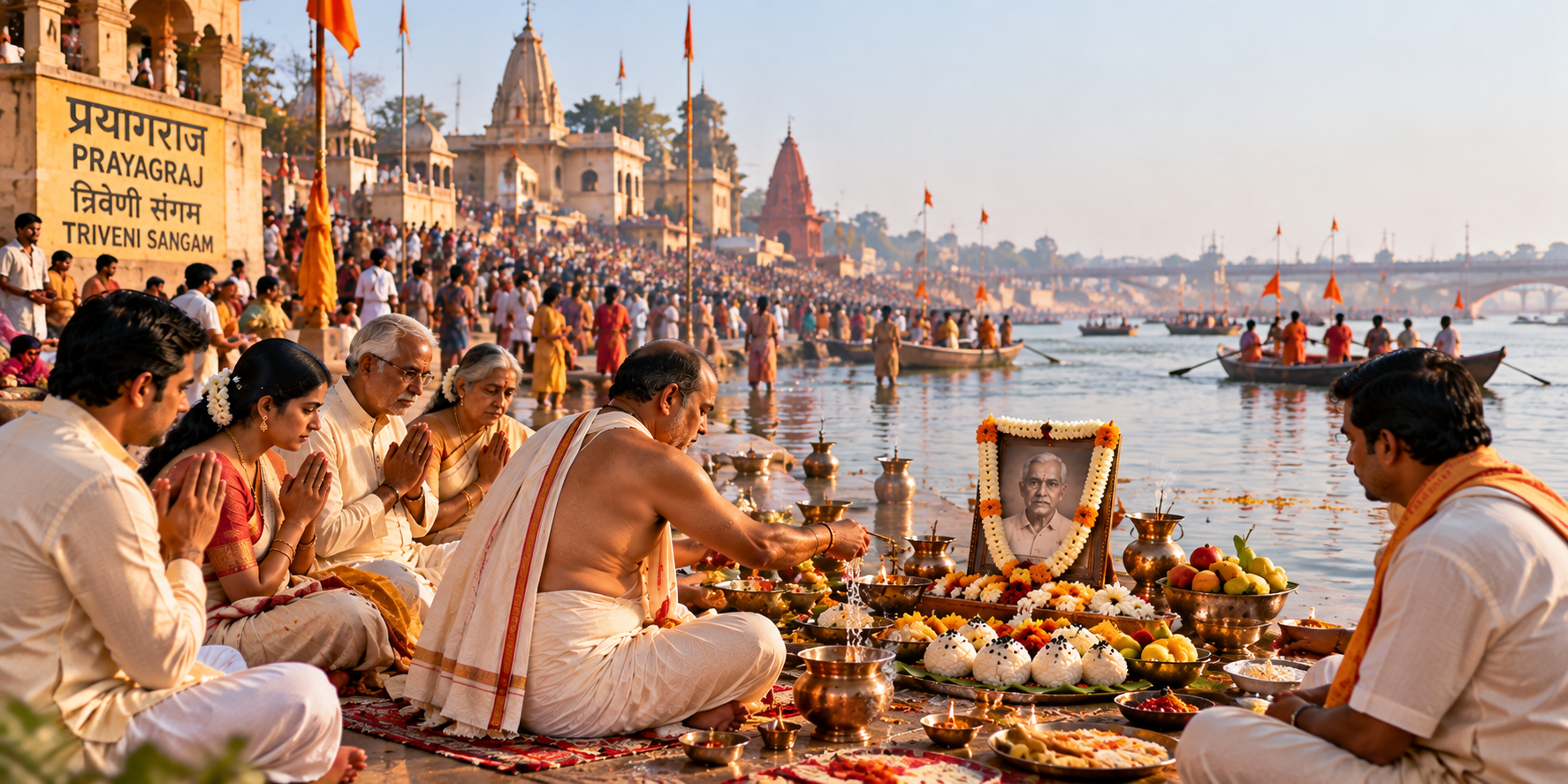
- Prayagraj Shraddha and Tarpan: Sangam Traditions Explained
- Brahma Kapal in Badrinath: Ancestor Ritual Tradition and Visitor Guide
- Trimbakeshwar and Shraddha Traditions: General Pilgrimage Guide
- Rameswaram and Ancestor Rituals: General Pilgrimage Guide
- Ujjain and Ancestral Ritual Traditions: General Visitor Guide
- Gaya vs Haridwar for Pind Daan: Traditional Differences to Understand
- Gaya vs Varanasi for Shraddha: Pilgrimage Traditions Compared
- How to Plan a Pind Daan Pilgrimage for Pitru Paksha
- What to Carry for Shraddha and Pind Daan at a Pilgrimage Site
- How to Choose a Priest or Panda for Shraddha at a Pilgrimage Site
- Travel Etiquette During Pitru Paksha and Shraddha Pilgrimages
- Ancestor Pilgrimage FAQ: Gaya, Haridwar, Varanasi and Other Sacred Places
- Frequently asked questions
For many Hindu families, performing pind daan at a great tirtha, a sacred crossing place, is a once-in-a-lifetime act of devotion to their ancestors. Gaya above all, but also Haridwar, Varanasi, Prayagraj, Badrinath and others, have been visited for this purpose for centuries, and their priestly families have guided generations of the same households.
This guide describes the major sites, the traditions that make each distinctive, and how to plan a pilgrimage during Pitru Paksha, when these places are at their busiest.
Key takeaways
- Gaya is the most revered site for pind daan; the Vishnupad Temple, Phalgu river and Akshayavat form its core.
- Haridwar's pandas keep hand-written family registers going back generations; many families discover their ancestors' visits there.
- Varanasi is known for Pishach Mochan Kund and tripindi Shraddha; Prayagraj for rites at the Triveni Sangam.
- Brahma Kapal at Badrinath is traditionally seen as a place of culminating offering.
- During Pitru Paksha, book early, agree fees in advance, and carry simple clothes, sesame and your family's details.
1 of 20
Gaya Shraddha and Pind Daan: Complete Pilgrimage Guide
Gaya, in southern Bihar, is the most celebrated place in India for pind daan. During Pitru Paksha it hosts a large annual gathering, often called the Pitru Paksha Mela, when pilgrims arrive from across India and abroad.
What the pilgrimage involves
Traditionally, Gaya Shraddha is performed at a series of sacred spots called vedis. Older texts speak of hundreds; today pilgrims commonly visit a smaller set, of which the most important are the Vishnupad Temple, the banks of the Phalgu river and the Akshayavat banyan, along with hills such as Pretshila and Ramshila. Rites can be arranged over one day or extended across several, sometimes the full fortnight.
Priests
Rites at Gaya are guided by hereditary priests known as Gayawal pandas, many of whom keep records of the families they serve.
Getting there
Gaya has a railway junction and an airport, and Bodh Gaya is nearby. During Pitru Paksha, trains and lodging fill early.
See why Gaya matters, Vishnupad, Phalgu and Akshayavat.
2 of 20
Why Is Gaya Important for Pind Daan and Ancestor Rituals?
Gaya's importance rests on a rich body of tradition, much of it gathered in the Gaya Mahatmya section of the Vayu Purana and related texts.
The central legend concerns Gayasura, a demon of such devotion and austerity that his body became supremely purifying. To contain this power, the gods performed a sacrifice upon his body, and Vishnu pressed him down with his foot. Gayasura asked that the place where he lay be forever sacred and that offerings made there should liberate the ancestors. Gaya is understood to be that place, and the Vishnupad footprint marks where Vishnu stood.
Other traditions reinforce Gaya's status: Rama and Sita are said to have offered pinda for King Dasharatha here, and a famous verse expresses the hope that among one's descendants at least one will go to Gaya.
Many families believe that Gaya Shraddha brings lasting satisfaction to the ancestors. Some understand this to mean that annual rites are no longer needed afterward, but many families continue them. Ask your own priest how your tradition sees it. See Gaya vs Haridwar.
3 of 20
Vishnupad Temple and Pind Daan in Gaya: Cultural Guide
The Vishnupad Temple stands on the bank of the Phalgu river in Gaya and enshrines a footprint of Vishnu, about 40 centimetres long, set in a basalt rock known as the Dharmashila and enclosed in a silver-plated basin.
The present stone temple was built in the late eighteenth century under the patronage of Ahilyabai Holkar, the Maratha queen of Indore, who rebuilt many sacred sites across India. Its tall, carved sikhara dominates the old town.
Pind daan at Vishnupad is one of the principal rites of a Gaya pilgrimage. Pindas are offered in the temple precinct and, in many traditions, placed at or near the footprint, symbolising the offering of the ancestors into Vishnu's care.
Visiting
- The temple is busiest early in the morning and on Sarva Pitru Amavasya.
- Photography rules and entry arrangements can change; follow the signs and the guidance of your priest.
- Non-Hindu visitors have historically faced restrictions in some parts of the precinct; check current rules locally.
4 of 20
Phalgu River and Shraddha Traditions in Gaya
The Phalgu flows past Gaya and is central to its rites, though for much of the year it looks like a broad bed of sand. Water runs beneath the surface, and pilgrims and priests often dig small pits in the sand to draw it for tarpan.
A popular legend explains why. When Rama went to fetch materials for Dasharatha's Shraddha, Dasharatha appeared to Sita and asked for his offering. Sita offered pindas of sand, and in one common version the Phalgu river, a cow, a ketaki flower and a Brahmin were among the witnesses. When Rama returned and doubted her, the river and others denied what they had seen, and Sita cursed the Phalgu to flow hidden under sand. The Akshayavat, which spoke the truth, received a blessing. This is a regional tradition widely told in Gaya rather than an episode of Valmiki's Ramayana.
During Pitru Paksha, especially in years with late monsoon rains, water may flow on the surface. A rubber dam built near the Vishnupad Temple and opened in 2023 was designed to hold water at the main ghats year-round; check current conditions locally.
Tarpan in the Phalgu is typically one of the first rites of a Gaya pilgrimage.
5 of 20
Akshay Vat in Gaya: Significance in Ancestral Ritual Traditions
The Akshayavat (also Akshaya Vata), "the imperishable banyan", is a sacred banyan tree in Gaya and traditionally the final stop of the Gaya pind daan sequence.
In the Phalgu legend, the Akshayavat alone told the truth about Sita's offering and was blessed with immortality, so offerings made beneath it are considered imperishable too. Pilgrims offer pindas here as a concluding rite, and the Gayawal priest often formally blesses the family at this point, sometimes marking the completion with a ritual acknowledgement of their satisfaction.
The idea of an "undying" banyan appears elsewhere in Hindu sacred geography, notably at Prayagraj, and connects to the wider symbolism of the banyan as a tree of continuity, whose aerial roots become new trunks, much as descendants carry forward a lineage.
Visitors should follow priestly guidance about the sequence and treat the site with respect: remove footwear where required and avoid disturbing offerings left by others.
6 of 20
Haridwar Shraddha and Tarpan: Complete Pilgrimage Guide
Haridwar, where the Ganga leaves the Himalaya for the plains in Uttarakhand, is one of the seven holiest cities of Hindu tradition and a major site for ancestral rites throughout the year.
Where rites take place
- Kushavarta Ghat is traditionally the principal ghat for Shraddha and pind daan.
- Har Ki Pauri is the most famous ghat, known for its evening Ganga aarti and for tarpan and immersion rites. See Har Ki Pauri.
- Narayani Shila temple is also closely associated with rites for the ancestors.
The pandas and their registers
Haridwar's hereditary priests (pandas) are famous for keeping genealogical registers (bahis), organised by the family's home district and village. Visiting families give their details, and the panda can often trace records of forebears who came before, sometimes over many generations. Many families rediscover their gotra this way.
Practicalities
Haridwar is well connected by rail and road from Delhi, with the nearest airport at Dehradun. Pitru Paksha and the Amavasya are busy; book ahead.
7 of 20
Har Ki Pauri and Ancestor Remembrance Rituals in Haridwar
Har Ki Pauri ("the steps of Hari") is Haridwar's iconic ghat, where a footprint said to be Vishnu's is enshrined at the Brahma Kund. Tradition holds that drops of the nectar of immortality fell here, which is why it is a focal point of the Kumbh Mela.
For ancestral remembrance, Har Ki Pauri is where many families bathe, offer tarpan into the Ganga and immerse ashes (asthi visarjan) after a cremation. During Pitru Paksha, families perform tarpan here in the morning and often attend the evening Ganga aarti, lighting leaf-boat lamps (diyas) that float downstream, many in memory of loved ones.
Practical notes:
- The current is strong; use the chains and railings provided when bathing.
- The evening aarti draws very large crowds; arrive early and keep children close.
- Many ritual services at the ghat are offered by pandas and assistants; agree what is included and the dakshina before starting.
- Keep offerings simple and biodegradable to protect the river.
8 of 20
Varanasi Shraddha and Pind Daan: Visitor and Ritual Guide
Varanasi (Kashi) is revered as the city where death itself brings liberation, and it holds a special place in ancestral rites.
Key sites
- Pishach Mochan Kund, a sacred tank in the city, is especially associated with tripindi Shraddha, a rite performed for ancestors believed to be unsettled, particularly those who died suddenly or without proper rites. During Pitru Paksha it is crowded with families.
- The Ganga ghats, including Dashashwamedh and others, are used for tarpan and pind daan.
- Manikarnika Ghat, the great cremation ghat, is not a site for Pitru Paksha rites as such but is part of the city's powerful association with death and liberation.
Visiting
Varanasi's ghats are steep and crowded; the old city's lanes are narrow and best navigated on foot. Many visitors arrange rites through a family priest or a known local priest rather than accepting offers at the ghat. Boats are widely used to reach mid-river for tarpan and immersion.
See Gaya vs Varanasi.
9 of 20
Prayagraj Shraddha and Tarpan: Sangam Traditions Explained
Prayagraj (formerly Allahabad) sits at the Triveni Sangam, the confluence of the Ganga, the Yamuna and the unseen Saraswati. Tradition calls it Tirtharaj, the king of pilgrimage places, and rites performed at the confluence are held in especially high esteem.
For ancestral rites, families typically travel by boat to the confluence, where a platform or boat serves as the setting for tarpan and pind daan. In many traditions the male performer has his head shaved (mundan) on the bank before the rite, as a mark of mourning and purification.
Prayagraj is part of a traditional triad of ancestral pilgrimage, together with Kashi (Varanasi) and Gaya, and some families perform rites at all three in sequence on a single journey.
Practical notes: the Sangam area is managed by the local administration and conditions vary with river levels and events such as the Magh Mela. Agree boat fares and priest dakshina before setting out, and follow safety instructions on the water.
10 of 20
Brahma Kapal in Badrinath: Ancestor Ritual Tradition and Visitor Guide
Brahma Kapal is a flat rock platform on the bank of the Alaknanda river, a short walk from the Badrinath Temple in the Garhwal Himalaya, at more than 3,000 metres.
Tradition connects it with the story of Shiva severing one of Brahma's heads, which clung to his hand until it fell here, freeing him. The place is therefore associated with release, and pind daan at Brahma Kapal is regarded in many traditions as a culminating offering for the ancestors. Some families believe it completes their obligations in a way similar to Gaya.
Visiting
- Badrinath is open for roughly six months each year, typically from late April or May until around November; exact opening and closing dates are announced annually. Pitru Paksha falls within the open season.
- The approach is by mountain road, and landslides can cause delays, especially just after the monsoon. Build in extra days.
- The altitude and cold demand warm clothing and care for elderly pilgrims.
- Local priests at Brahma Kapal guide the rites; the Tapt Kund hot spring near the temple is used for bathing beforehand.
Check current road and registration requirements for the Char Dham route before travelling.
11 of 20
Trimbakeshwar and Shraddha Traditions: General Pilgrimage Guide
Trimbakeshwar, near Nashik in Maharashtra, is one of the twelve Jyotirlinga temples of Shiva and lies near the source of the Godavari river on the Brahmagiri hills. The sacred tank Kushavarta is traditionally regarded as the Godavari's origin point for ritual purposes.
Trimbakeshwar is especially known for rites performed to address ancestral disturbance, including:
- Narayan Nagbali, a rite associated in tradition with untimely deaths and with certain forms of ancestral affliction (pitru dosha);
- Tripindi Shraddha, performed for ancestors of the past three generations believed to be unsatisfied.
These rites are usually performed by local priests over one to three days, and families are often asked to arrive the previous day. Local practice specifies requirements such as clothing and fasting.
Nashik itself, with Ramkund on the Godavari, is also an important site for immersing ashes and ancestral rites.
Because these rites are sometimes marketed with fear-based claims, it helps to approach them with a trusted family priest's guidance and to agree fees clearly in advance.
12 of 20
Rameswaram and Ancestor Rituals: General Pilgrimage Guide
Rameswaram, an island town in Tamil Nadu, is home to the Ramanathaswamy Temple, one of the twelve Jyotirlingas, and is linked in tradition to Rama's worship of Shiva before and after the war in Lanka.
It is one of South India's foremost places for ancestral rites (pitru karma, tarpanam). Key practices:
- Agni Theertham, the stretch of sea in front of the temple, where pilgrims bathe and offer tarpanam, especially on Amavasya.
- The temple's many theerthams (sacred wells), traditionally twenty-two, whose waters pilgrims are bathed in by attendants in sequence.
- Rites at Dhanushkodi, at the tip of the island, where many families also offer tarpanam.
Mahalaya Amavasya, Aadi Amavasai (July to August) and Thai Amavasai (January to February) draw large crowds. The town is reached by rail and road across the Pamban bridge, with the nearest airport at Madurai.
Traditionally, pilgrims combine Rameswaram with Varanasi, carrying Ganga water to Rameswaram and sand or sea water back north, a practice that joins the two ends of India's sacred geography.
13 of 20
Ujjain and Ancestral Ritual Traditions: General Visitor Guide
Ujjain, in Madhya Pradesh, is one of India's seven sacred cities and home to the Mahakaleshwar Jyotirlinga. It sits on the Shipra river, whose ghats host Kumbh (Simhastha) gatherings.
For ancestral rites, Ujjain's best-known site is Siddhavat, a sacred banyan on the Shipra at Bhairavgarh, regarded in local tradition as comparable to the Akshayavat of Prayagraj and Gaya. Families perform tarpan, pind daan and rites for untimely deaths here. Ram Ghat and other ghats along the Shipra are also used for tarpan.
During Pitru Paksha, Ujjain draws pilgrims especially from Madhya Pradesh, Rajasthan and Gujarat, for whom it is closer than Gaya or Haridwar.
Visitors often combine rites with darshan at Mahakaleshwar, which can involve advance booking for certain services such as the early-morning Bhasma Aarti. Check current booking arrangements before travelling.
14 of 20
Gaya vs Haridwar for Pind Daan: Traditional Differences to Understand
Both are revered; they serve somewhat different roles in family tradition.
| Gaya | Haridwar | |
|---|---|---|
| Main association | Pind daan for lasting satisfaction of ancestors | Ganga rites, asthi visarjan, tarpan and family registers |
| Key sites | Vishnupad, Phalgu, Akshayavat and other vedis | Kushavarta Ghat, Har Ki Pauri, Narayani Shila |
| Priests | Gayawal pandas | Hereditary pandas with genealogical registers |
| When families go | Often once in a lifetime, especially in Pitru Paksha | Frequently after a death for immersion; any time for tarpan |
| Region | Bihar | Uttarakhand |
Many North Indian families go to Haridwar soon after a death to immerse ashes and meet their panda, and to Gaya later, when they feel ready, for pind daan. The two are complementary rather than alternatives. Which one a family prioritises depends largely on regional custom and family history.
15 of 20
Gaya vs Varanasi for Shraddha: Pilgrimage Traditions Compared
Gaya is primarily a place of offering to the ancestors: its entire sacred landscape is built around pind daan, and its authority in this role is almost unique.
Varanasi is primarily a place of liberation: dying in Kashi is believed to bring moksha, and cremation at Manikarnika is part of that idea. For ancestral rites, Varanasi is especially associated with tripindi Shraddha at Pishach Mochan Kund, performed for ancestors thought to be unsettled.
In practice:
- Families seeking the classical, comprehensive pind daan for their ancestors typically go to Gaya.
- Families concerned about an ancestor who died untimely, or following a priest's advice about ancestral affliction, may perform rites in Varanasi or Trimbakeshwar.
- Many pilgrims follow the traditional sequence of Prayagraj, Kashi and Gaya, completing rites at each.
Neither is a substitute for regular home Shraddha, which remains the everyday heart of the tradition.
16 of 20
How to Plan a Pind Daan Pilgrimage for Pitru Paksha
- Decide where and why. Gaya for comprehensive pind daan; Haridwar, Prayagraj or Varanasi for Ganga rites; regional sites for convenience. Discuss with elders.
- Choose dates. In the 2026 New Delhi reference, Purnima Shraddha is 26 September, the main Pratipada sequence begins 27 September, and Sarva Pitru Amavasya is 10 October. Pilgrimage crowds often peak on Sarva Pitru Amavasya and weekends; if you have flexibility, midweek dates can be calmer.
- Find a priest. Contact your family's hereditary panda if you have one, or get a recommendation from relatives or your local temple. See choosing a priest.
- Book travel and stay early. Trains and hotels fill weeks ahead. Many pilgrims stay in dharamshalas or guest houses near the ghats.
- Gather information. Names, relationships and gotras of the ancestors to be honoured; tithis if known.
- Plan for health. September can be hot and humid in the plains and cold in the mountains. Elderly pilgrims should plan rest days.
- Pack. See what to carry.
- Budget. Agree dakshina and service fees with the priest in advance, and set aside money for daan.
17 of 20
What to Carry for Shraddha and Pind Daan at a Pilgrimage Site
Priests at major sites usually supply the ritual materials, but it helps to carry:
- Clothing. Plain white or light-coloured clothes; for men, a dhoti and upper cloth if customary; a change of clothes after bathing; a towel.
- Family details. A written list of ancestors' names, relationships, gotras and tithis; family district and village for panda registers.
- Basic samagri in case you need it: black sesame, a small copper vessel, kusha if you have it.
- Photographs of the ancestors, if your family's custom includes them.
- Money in small denominations for dakshina, daan, boats and offerings, plus a record of any agreed fees.
- Personal needs. Water bottle, simple snacks for after the rite (many fast until it is complete), any medication, sun protection or warm layers depending on the site.
- A bag for belongings and a plastic pouch for wet clothes.
Leave valuables and unnecessary jewellery at your lodging. Many ghats have limited, informal storage.
18 of 20
How to Choose a Priest or Panda for Shraddha at a Pilgrimage Site
At pilgrimage sites, rites are traditionally performed by hereditary priestly families, pandas at Haridwar, Prayagraj and elsewhere, Gayawals at Gaya, who serve particular regions or communities, often for generations.
Ways to find the right priest:
- Ask family elders. Your family may already have a panda whose registers contain your ancestors' names.
- Use the registers. At Haridwar and other sites, pandas are organised by the pilgrim's home district. Giving your district and village can lead you to the family that holds your records.
- Get a recommendation from your local temple, relatives or community organisations.
- Check official arrangements. Some sites and state tourism bodies provide lists or registration systems for priests during Pitru Paksha.
Good practice:
- Agree the scope of the rite and the dakshina clearly before starting.
- Be cautious with anyone who approaches you unsolicited at a station or ghat, or who uses fear to press for additional rites.
- Ask to see the family register, and add your own details for future generations.
19 of 20
Travel Etiquette During Pitru Paksha and Shraddha Pilgrimages
Pilgrims during Pitru Paksha are often grieving or performing deeply personal rites. A few courtesies help everyone.
- Dress modestly and simply; plain colours are appropriate.
- Photography. Do not photograph other families' rites, and ask before photographing priests. Follow temple rules on cameras.
- Quiet. Keep voices low at ghats and temples.
- Footwear. Remove it where required and use designated stands.
- River care. Use only biodegradable offerings, avoid plastic, and follow local guidance on what may be placed in the water.
- Queues and crowds. Be patient, especially on Amavasya; help elderly pilgrims where you can.
- Food. Many pilgrims eat simple vegetarian food during the pilgrimage; avoid eating or drinking alcohol near ritual areas.
- Beggars and sadhus. Giving is traditional during Pitru Paksha. Give what you feel is right, calmly.
- Respect differences. Families from other regions may follow very different sequences; that diversity is part of the tradition.
20 of 20
Ancestor Pilgrimage FAQ: Gaya, Haridwar, Varanasi and Other Sacred Places
Is a pilgrimage necessary?
No. Home Shraddha is the norm. Pilgrimage is an additional act of devotion.
Can pind daan at Gaya be done outside Pitru Paksha?
Yes. Gaya rites are performed throughout the year; Pitru Paksha is simply the most popular time.
Can women perform pind daan at Gaya?
Increasingly, yes; many priests accept daughters, wives and other women as performers, and the Sita legend is often cited in support. Ask the priest in advance.
Are there other important sites?
Yes, including Siddhpur in Gujarat (associated with rites for mothers, sometimes called Matru Gaya), Jajpur in Odisha on the Baitarani (Nabhi Gaya), Pehowa in Haryana, Pushkar in Rajasthan, and many riverbank and temple sites in the south.
Can I perform rites remotely at these sites?
Some priests perform rites on families' behalf and share recordings. See remote rites.
How much does it cost?
It varies widely by site, scope and priest. Agree fees clearly beforehand.
Frequently asked questions
Why is Gaya important for pind daan?
Tradition, especially the Gaya Mahatmya of the Vayu Purana, holds that offerings made at Gaya, sanctified by the legend of Gayasura and Vishnu's footprint, bring lasting satisfaction to the ancestors.
What are the main pind daan sites in Gaya?
The Vishnupad Temple, the banks of the Phalgu river and the Akshayavat banyan, along with other traditional vedis such as Pretshila and Ramshila.
Where is Shraddha performed in Haridwar?
Kushavarta Ghat is traditionally the main ghat for Shraddha and pind daan; Har Ki Pauri and Narayani Shila are also important.
What is tripindi Shraddha?
A rite performed for ancestors of up to three generations believed to be unsatisfied or unsettled, commonly associated with Pishach Mochan Kund in Varanasi and with Trimbakeshwar.
What is Brahma Kapal?
A rock platform on the Alaknanda near Badrinath Temple where pind daan is traditionally regarded as a culminating offering for the ancestors.
How far in advance should I plan a Pitru Paksha pilgrimage?
Several weeks at least; trains, hotels and priests are heavily booked during Pitru Paksha, especially around Sarva Pitru Amavasya.