Contents: 20 topics
- Pitru Paksha Traditions in North India
- Shraddha Traditions in Uttar Pradesh
- Pitru Paksha and Pind Daan Traditions in Bihar
- Shraddha Traditions in Uttarakhand and Haridwar
- Pitru Paksha Traditions in Rajasthan
- Shraddha Traditions in Madhya Pradesh
- Pitru Paksha Traditions in Maharashtra
- Mahalaya and Ancestor Remembrance Traditions in West Bengal
- Pitru Paksha Traditions in Odisha
- Shraddha Traditions in Gujarat
- Ancestor Ritual Traditions in Karnataka
- Ancestor Remembrance Traditions in Tamil Nadu
- Ancestor Ritual Traditions in Andhra Pradesh and Telangana
- Ancestor Remembrance Traditions in Kerala
- Pitru Paksha Practices in Nepal and Himalayan Hindu Communities
- How Pitru Paksha Traditions Differ Across Indian Regions
- North Indian vs South Indian Ancestor Ritual Traditions: General Differences
- Mahalaya in Bengal vs Sarva Pitru Amavasya in Other Regions
- How Family Sampradaya Shapes Shraddha Practice
- Regional Shraddha Traditions FAQ: Why Customs Differ from Family to Family
- Frequently asked questions
Ask ten families how they observe Pitru Paksha and you may get ten answers, each correct for that family. Geography is one reason: the fortnight's name, its key sites, its foods and even the ancestral day that matters most change as you move across the subcontinent.
This guide takes a regional tour, from the Gangetic plains to the Himalaya, the west coast, Bengal and the south, and then steps back to look at why practices differ, including calendar systems, sampradaya and family lineage.
Key takeaways
- In parts of North India the fortnight is called Kanagat; in Bengal, Mahalaya also opens the Durga Puja season.
- Gaya (Bihar) and Haridwar (Uttarakhand) anchor North Indian pilgrimage traditions.
- In Andhra Pradesh and Telangana, Mahalaya Amavasya is Peddala Amavasya, and Telangana's Bathukamma begins that day.
- Kerala's principal ancestral day is Karkidaka Vavu in July to August, not Pitru Paksha.
- Differences come from calendars, sampradaya, community and family lineage, and none is more correct than another.
1 of 20
Pitru Paksha Traditions in North India
Across the Hindi-speaking north, Pitru Paksha is commonly called Shraadh or Kanagat (a colloquial form of Kanyagata, "when the sun is in Kanya"). It is observed with a strong sense of restraint.
Common features:
- Tithi Shraddhas at home, often with a family purohit, and a collective rite on Sarva Pitru Amavasya.
- Kheer and puri as the central Shraddha foods, with pumpkin or gourd, kadhi and dal.
- Crows are fed on rooftops, and families wait for them before eating.
- Restraint: no new clothes, purchases or celebrations; many men do not cut hair or shave.
- Pilgrimage to Haridwar, Gaya, Varanasi, Prayagraj and Garhmukteshwar.
- Sanjhi, a folk art tradition in which girls make images of the goddess Sanjhi on walls during the fortnight, in Braj, Haryana, Rajasthan and Malwa.
The fortnight leads directly into Navratri and then Dussehra, the start of the festive season. See Uttar Pradesh, Bihar and Rajasthan.
2 of 20
Shraddha Traditions in Uttar Pradesh
Uttar Pradesh is home to three of the most important sacred cities for ancestral rites: Varanasi, Prayagraj and, on its northern edge, access to Haridwar (now in Uttarakhand).
Key features:
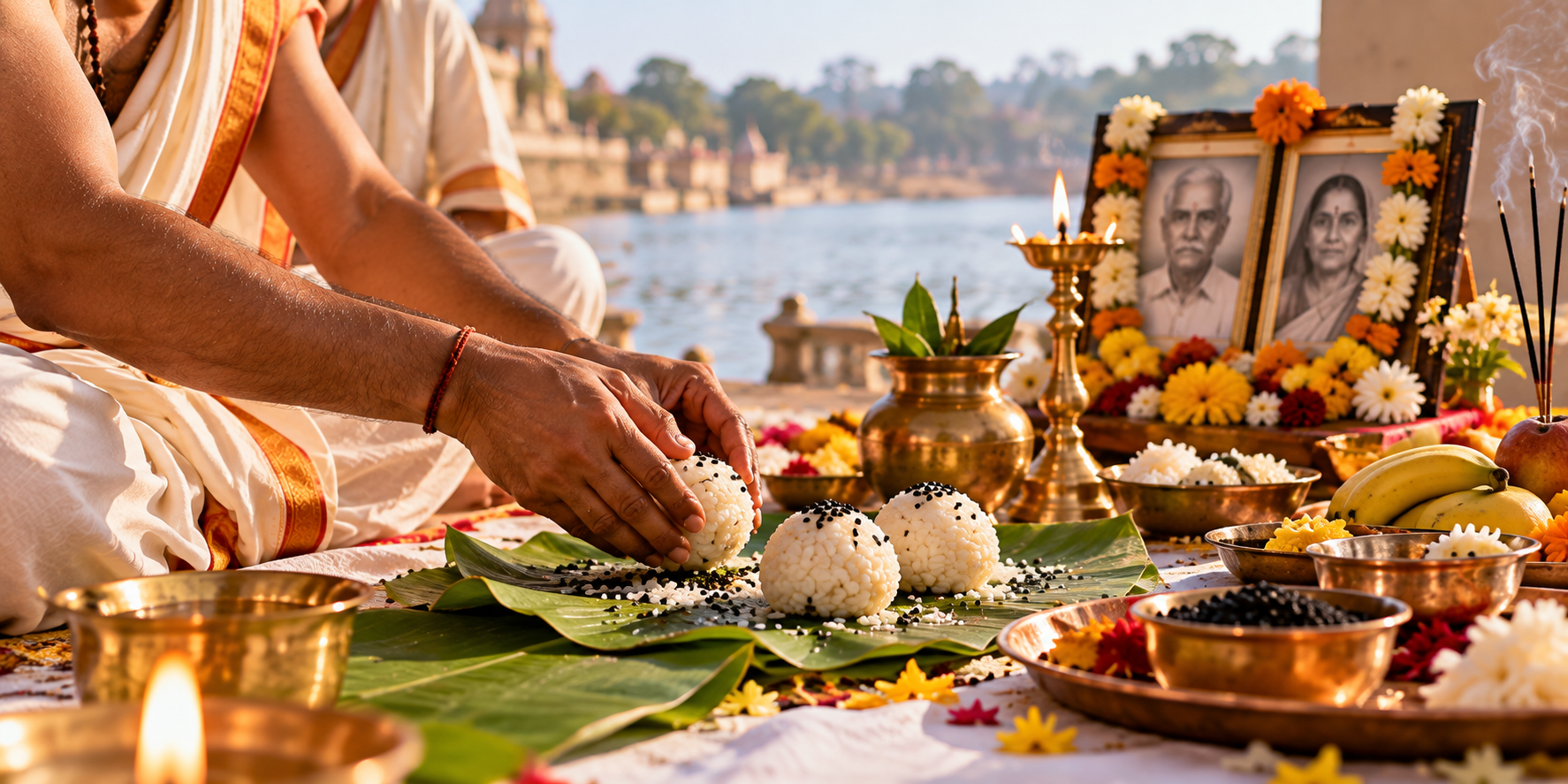
- Varanasi: Shraddha on the Ganga ghats and tripindi Shraddha at Pishach Mochan Kund. See Varanasi.
- Prayagraj: tarpan and pind daan at the Triveni Sangam, often with mundan. See Prayagraj.
- Garhmukteshwar on the Ganga in western UP, Naimisharanya near Sitapur, and Bithoor near Kanpur are regional sites for rites.
- Home practice: Kanagat restraint, kheer-puri meals, crow feeding and gifts to Brahmins.
- Braj Sanjhi: in the Mathura-Vrindavan region, Sanjhi is also a temple art, with elaborate floor designs made in Krishna temples during the fortnight.
- Jivitputrika fast on Ashtami in eastern UP.
Western and eastern UP differ noticeably in dialect, food and detail; family custom is the final guide.
3 of 20
Pitru Paksha and Pind Daan Traditions in Bihar
Bihar holds a central place in ancestral rites because of Gaya, and during Pitru Paksha the state hosts one of the largest pilgrim gatherings in India. See the Gaya guide.
Other features:
- Punpun river: in local tradition, pind daan on the banks of the Punpun, south of Patna, is described as the first step of a Gaya pilgrimage for many pilgrims.
- Gayawal pandas: the hereditary priestly community of Gaya, whose families have served pilgrims for generations.
- Jivitputrika (Jitiya): the Ashtami of the fortnight is a major fast for mothers praying for their children's long life, widely observed in Bihar alongside ancestral rites.
- Home practice: tithi Shraddhas, crow feeding and Brahmin bhoj, with regional foods.
- Mithila traditions: Maithil communities in north Bihar have their own priestly traditions and calendars, which can differ in detail.
For many families across North India, a Gaya pilgrimage is the most significant ancestral act of a lifetime.
4 of 20
Shraddha Traditions in Uttarakhand and Haridwar
Uttarakhand, Devbhoomi, is home to some of the most important Himalayan sites for ancestral rites.
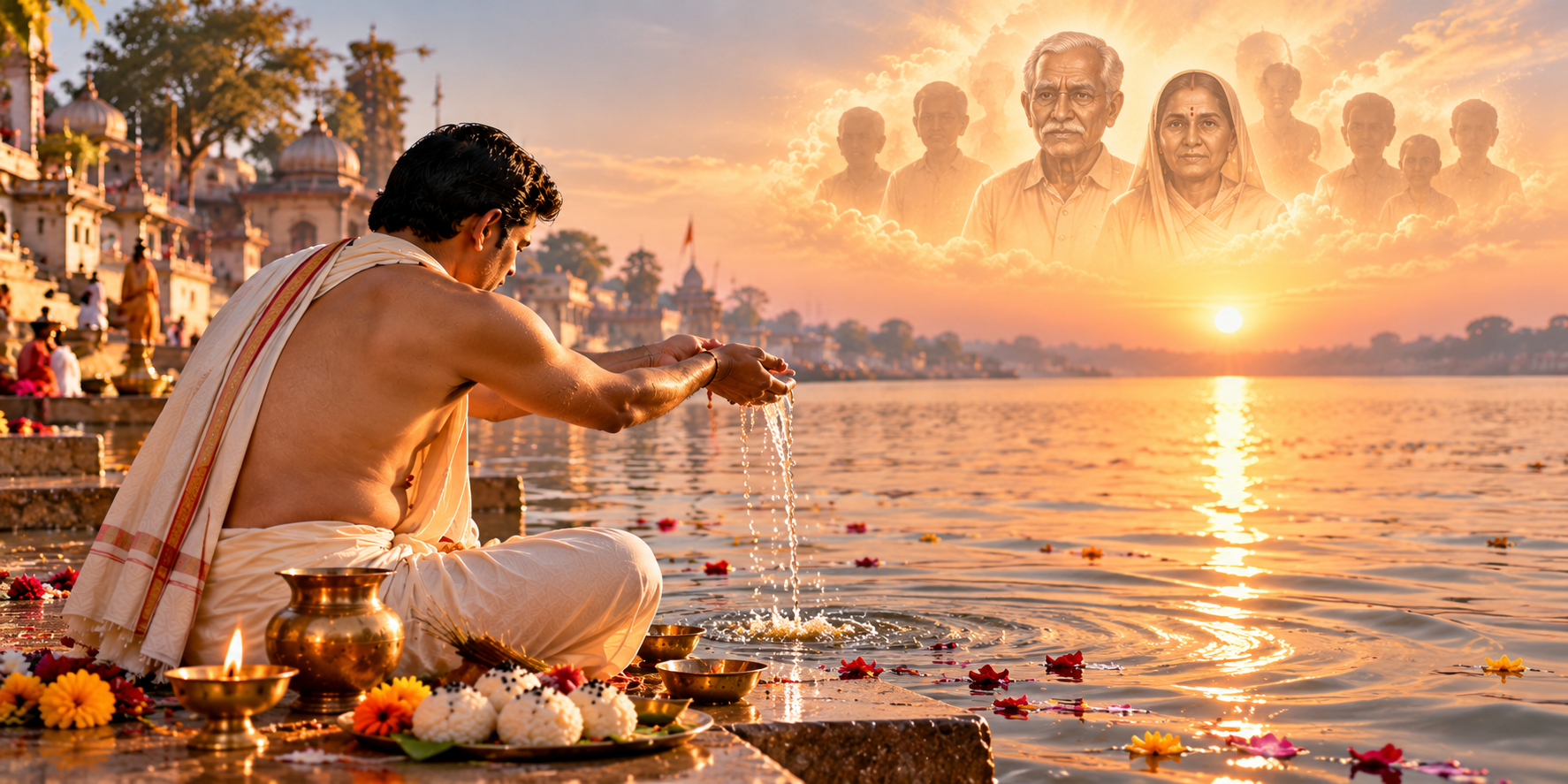
- Haridwar: Kushavarta Ghat, Har Ki Pauri and Narayani Shila; hereditary pandas with genealogical registers. See Haridwar.
- Devprayag: the confluence of the Alaknanda and Bhagirathi, where the Ganga takes its name, is used for tarpan and pind daan.
- Brahma Kapal, Badrinath: a culminating site for pind daan in many traditions. See Brahma Kapal.
- Rishikesh: ghats along the Ganga used by pilgrims for tarpan.
Local Garhwali and Kumaoni families observe Shraddha at home with their own customs, foods and priestly families. In mountain villages, the fortnight sometimes coincides with the end of the monsoon agricultural season.
For pilgrims, late September conditions on mountain roads can still be affected by monsoon landslides; allow extra time.
5 of 20
Pitru Paksha Traditions in Rajasthan
In Rajasthan, the fortnight is often called Shraadh or Kanagat.
Distinctive features:
- Sanjhi: one of Rajasthan's best-known Pitru Paksha customs. Unmarried girls create images of the goddess Sanjhi on house walls, traditionally with cow dung, flowers and coloured materials, changing designs each day through the fortnight, and sing Sanjhi songs in the evenings. The practice is linked to wishes for a good husband and to the season, and it culminates on Amavasya. It is also found in Malwa, Haryana and Braj.
- Pushkar: the sacred lake at Pushkar is a major regional site for tarpan and pind daan.
- Food: regional Shraddha dishes alongside kheer and puri, varying by community.
- Restraint: purchases and celebrations are postponed.
Rajasthan's many communities, Marwari, Mewari, Shekhawati and others, observe different detailed customs. Marwari families living elsewhere in India and abroad often keep these customs closely.
6 of 20
Shraddha Traditions in Madhya Pradesh
Madhya Pradesh's sacred rivers and cities give it several regional centres for ancestral rites.
- Ujjain: tarpan and pind daan at Siddhavat and on the Shipra ghats. See Ujjain.
- Narmada: the river is deeply revered, and sites along it, including Omkareshwar and Amarkantak (the Narmada's source), are used for rites.
- Malwa Sanjhi: girls in the Malwa region keep the Sanjhi custom through the fortnight.
- Chitrakoot: on the MP-UP border, associated with Rama's exile and used for rites by pilgrims.
Home practice broadly follows North Indian patterns, kheer-puri meals, crow feeding and restraint, with regional variation in food and dialect. Families from neighbouring Gujarat and Rajasthan often come to Ujjain for rites, as it is closer than Gaya or Haridwar.
7 of 20
Pitru Paksha Traditions in Maharashtra
In Maharashtra, the fortnight follows Ganeshotsav closely; the festival's immersion day (Anant Chaturdashi) falls just before Pitru Paksha begins. Families move from celebration to remembrance within days.
Features:
- Mahalaya Shraddha at home, often with family priests, on the ancestor's tithi, with Sarva Pitru Amavasya as the collective day.
- Amanta calendar: the fortnight is described as Bhadrapada Krishna Paksha.
- Food: kheer, puri or chapati, vade, gourd and colocasia preparations such as alu vadi, and seasonal vegetables. Families commonly prepare a set Shraddha menu.
- Crow feeding (kavlyala ghas, the crow's morsel) is a widely recognised custom.
- Trimbakeshwar and Nashik are major regional pilgrimage sites. See Trimbakeshwar.
Some families perform one annual Mahalaya meal for all ancestors rather than individual tithis. Community differences, for example among Deshastha, Kokanastha, CKP and other communities, shape details.
8 of 20
Mahalaya and Ancestor Remembrance Traditions in West Bengal
In West Bengal, Mahalaya is one of the most emotionally charged days of the year, because it holds two meanings at once.
- Pitri Paksha ends. Before dawn, men and increasingly women gather on the ghats of the Hooghly and other rivers to perform tarpan for their ancestors. Scenes at Kolkata's ghats, such as Jagannath Ghat and Babughat, are iconic.
- Devi Paksha begins. Mahalaya marks the start of the Goddess fortnight culminating in Durga Puja. Artisans traditionally paint the eyes of Durga images (chokkhu daan) around this time.
- Mahishasura Mardini. Since the early 1930s, All India Radio has broadcast a pre-dawn programme of hymns and narration, famously voiced by Birendra Krishna Bhadra. Listening to it at dawn on Mahalaya is a cherished ritual for Bengali families worldwide.
The result is a day that begins in remembrance and turns towards celebration. Bengali communities abroad often hold Mahalaya gatherings on the nearest weekend. See Mahalaya vs Sarva Pitru Amavasya.
9 of 20
Pitru Paksha Traditions in Odisha
In Odisha, the fortnight's culmination is known as Mahalaya, and, as in Bengal, it leads into the Goddess festival, observed in Odisha as Durga Puja and Dussehra.
Features:
- Jajpur on the Baitarani river is regarded as one of the three Gaya-kshetras in tradition, known as Nabhi Gaya (the navel of Gayasura's body, with Gaya itself as the head and Pithapuram in Andhra Pradesh as the feet, in one widespread account). Pilgrims perform pind daan here.
- Tarpan at rivers and the sea: families perform tarpan at rivers and on beaches, including at Puri, on Mahalaya.
- Home rites follow the tithi pattern with Odia priests and customs.
- Food: regional Shraddha meals, with rice, dal, seasonal vegetables and sweets such as kheeri.
Odia communities also observe other ancestral occasions through the year. Practices differ between coastal and western Odisha.
10 of 20
Shraddha Traditions in Gujarat
In Gujarat, Pitru Paksha is known simply as Shraddh, and it has several distinctive features.
- Doodhpak and puri: doodhpak, a rich milk-and-rice dish similar to kheer, served with puri, is the classic Gujarati Shraddh meal, often made on the ancestor's tithi and shared with family and neighbours.
- Siddhpur: the town of Siddhpur in north Gujarat, with its Bindu Sarovar, is known as Matru Gaya, a special place for rites for mothers.
- Trayodashi: in some Gujarati traditions, Trayodashi is observed for children who died young, with regional names such as Kakbali or Balabholani Teras.
- Crow feeding (kagvas) is widely practised.
- Navratri follows immediately, and for Gujarat, with its renowned garba celebrations, the shift from Shraddh to Navratri is especially marked.
Gujarati families abroad, particularly in the UK, US, Canada and East Africa, often maintain doodhpak-puri traditions faithfully.
11 of 20
Ancestor Ritual Traditions in Karnataka
In Karnataka, the fortnight is known as Mahalaya Paksha or Pitru Paksha, and Mahalaya Amavasya is a major day.
Features:
- Amanta calendar: the fortnight is described as Bhadrapada Krishna Paksha.
- Tarpana is performed at home and at rivers and temple tanks. Srirangapatna, where the Kaveri flows west (Paschimavahini), is a major site for tarpana and immersing ashes. Gokarna on the coast is also important.
- Food: the Shraddha meal may include rice, specific vegetables, payasa, and preparations that vary between communities, Madhva, Smarta, Sri Vaishnava and others.
- Mahalaya and Dasara: Mahalaya is followed by Navaratri, culminating in Mysuru Dasara.
Karnataka shows how strongly sampradaya shapes practice: Madhva families following Dvaita traditions, for example, may observe ritual details differently from Smarta families. See how sampradaya shapes practice.
12 of 20
Ancestor Remembrance Traditions in Tamil Nadu
Tamil Nadu has a rich year-round tradition of ancestral rites, in which Amavasai (new moon) tarpanam is central.
Key days:
- Mahalaya Amavasai closes Mahalaya Paksham, with large gatherings for tarpanam at the sea, rivers and temple tanks.
- Aadi Amavasai (July to August) and Thai Amavasai (January to February) are also major days, often equal to or greater than Mahalaya in popular observance.
- Monthly Amavasai tarpanam is widely practised in many families.
Important sites include Rameswaram (Agni Theertham), Kanyakumari, the Amma Mandapam ghat at Srirangam on the Kaveri, and temples such as Thiruvallur, associated with Amavasai.
Many Tamil families perform hiranya shraddha, offering uncooked provisions, vegetables and dakshina to a priest instead of cooking a full meal, a widely accepted alternative. Mahalaya Paksham is also observed with daily tarpanam in many homes. See Rameswaram.
13 of 20
Ancestor Ritual Traditions in Andhra Pradesh and Telangana
In Andhra Pradesh and Telangana, Mahalaya Amavasya is known as Peddala Amavasya, "the new moon of the elders".
Features:
- Mahalaya Paksham observed with tithi rites and a collective offering on Peddala Amavasya.
- Rivers: tarpanam on the Godavari at Rajahmundry and elsewhere, and on the Krishna at Vijayawada and other ghats.
- Pithapuram in East Godavari is associated in one widespread tradition with the feet of Gayasura (Pada Gaya), completing the trio with Gaya and Jajpur.
- Bathukamma: in Telangana, the flower festival of Bathukamma begins on Mahalaya Amavasya (the first day is called Engili Pula Bathukamma), turning the day from remembrance to celebration.
- Food: rice-based meals with dal, vegetables and payasam, varying by community.
The juxtaposition in Telangana, ancestral offerings in the morning and the first Bathukamma in the evening, is one of the clearest examples of how Pitru Paksha opens into the festival season.
14 of 20
Ancestor Remembrance Traditions in Kerala
Kerala's ancestral calendar differs from most of India. Its most important ancestral day is Karkidaka Vavu, the new moon of the Malayalam month of Karkidakam (July to August), when hundreds of thousands of people perform bali tharpanam at rivers, beaches and temples.
Major sites for Vavu Bali include:
- Aluva Manappuram on the Periyar river;
- Thirunelli in Wayanad, with the Papanasini stream;
- Varkala Papanasam beach;
- Thiruvallam near Thiruvananthapuram.
Thulam Vavu (October to November) is another ancestral day. Pitru Paksha and Mahalaya are also observed in Kerala, particularly among families with Tamil or Konkani traditions and in some Brahmin communities, but they are generally less prominent than Karkidaka Vavu.
For Keralite families elsewhere, this difference is worth knowing when coordinating with relatives from other regions.
15 of 20
Pitru Paksha Practices in Nepal and Himalayan Hindu Communities
In Nepal, the fortnight is known as Sorha Shraddha, "the sixteen Shraddhas", reflecting its sixteen lunar days from Purnima to Aunsi (Amavasya).
Features:
- Home Shraddha is performed on each ancestor's tithi, with Brahmin priests and traditional foods, following Nepali ritual custom.
- The fortnight ends immediately before Dashain, Nepal's greatest festival, which begins with Ghatasthapana the next day.
- Gokarna Aunsi (also Kushe Aunsi), the new moon in the month of Bhadra that falls before Sorha Shraddha, is observed as Father's Day, honouring living and departed fathers, with rites at the Gokarneshwar temple near Kathmandu.
- Matatirtha Aunsi in the month of Baisakh (April to May) is Mother's Day, with rites at Matatirtha near Kathmandu for departed mothers.
- Gosaikunda and other Himalayan sites are used for rites by pilgrims.
Hindu communities in the Indian Himalaya, including Sikkim, Darjeeling and Himachal Pradesh, share many of these customs alongside local traditions.
16 of 20
How Pitru Paksha Traditions Differ Across Indian Regions
Across India, practices differ along several axes:
| Aspect | Examples of variation |
|---|---|
| Name | Shraadh, Kanagat, Mahalaya Paksha, Peddala Amavasya, Sorha Shraddha |
| Key day | Sarva Pitru Amavasya in most regions; Karkidaka Vavu in Kerala; Aadi and Thai Amavasai also major in Tamil Nadu |
| Calendar label | Ashvin Krishna (purnimanta, North) or Bhadrapada Krishna (amanta, West and South) |
| Pilgrimage sites | Gaya, Haridwar, Varanasi, Prayagraj (North); Rameswaram, Srirangapatna, Trimbakeshwar (South and West); Jajpur (East) |
| Signature food | Kheer-puri (North), doodhpak-puri (Gujarat), payasam (South) |
| Adjacent festival | Navratri, Durga Puja, Bathukamma, Dasara, Dashain |
| Folk customs | Sanjhi (Rajasthan, Braj, Malwa); Mahalaya radio at dawn (Bengal) |
| Alternatives | Hiranya shraddha with uncooked provisions (common in the South) |
Beneath these differences, the core, remembering ancestors on their tithi, offering water, food and charity, and closing with a collective new-moon rite, is remarkably consistent.
17 of 20
North Indian vs South Indian Ancestor Ritual Traditions: General Differences
Broad generalisations are risky, but a few differences are frequently noted.
- Calendar. North India mostly uses the purnimanta calendar (month ends at full moon), the South and West mostly amanta (month ends at new moon). Pitru Paksha's days are the same; the month name differs.
- Emphasis on Amavasya. In the South, monthly Amavasai tarpanam and specific Amavasyas (Aadi, Thai, Mahalaya) are especially prominent. In the North, Pitru Paksha as a fortnight and pilgrimage to Gaya and Haridwar are more central.
- Ritual form. Southern households more often use hiranya shraddha (uncooked provisions and dakshina) as an accepted alternative to a cooked meal.
- Priestly records. North Indian pilgrimage pandas with genealogical registers are a distinctive institution.
- Terminology. "Tarpanam", "thithi" and "Mahalayam" in the South; "Shraadh", "tarpan" and "Kanagat" in the North.
- Food. Wheat-based puri in the North; rice-based meals in the South.
Within each region, community and sampradaya differences are often as large as those between North and South.
18 of 20
Mahalaya in Bengal vs Sarva Pitru Amavasya in Other Regions
Mahalaya and Sarva Pitru Amavasya are the same day: the Amavasya that closes Pitru Paksha (10 October 2026 in the New Delhi reference). What differs is how the day is felt.
| Mahalaya in Bengal | Sarva Pitru Amavasya elsewhere | |
|---|---|---|
| Morning | Tarpan on river ghats before dawn | Shraddha for all ancestors, often at midday |
| Emotional tone | Remembrance turning to anticipation of Durga's arrival | Solemn close of the ancestral fortnight |
| Cultural marker | Mahishasura Mardini radio broadcast at dawn | Evening lamp to bid the ancestors farewell |
| What follows | Devi Paksha and Durga Puja | Navratri, Dussehra, Bathukamma or Dasara |
In Bengal, the word "Mahalaya" has come to signal the start of the Puja season, so much so that many people associate it more with Durga than with ancestors. Yet the tarpan at dawn remains the heart of the day for observant families. See Pitru Paksha vs Mahalaya.
19 of 20
How Family Sampradaya Shapes Shraddha Practice
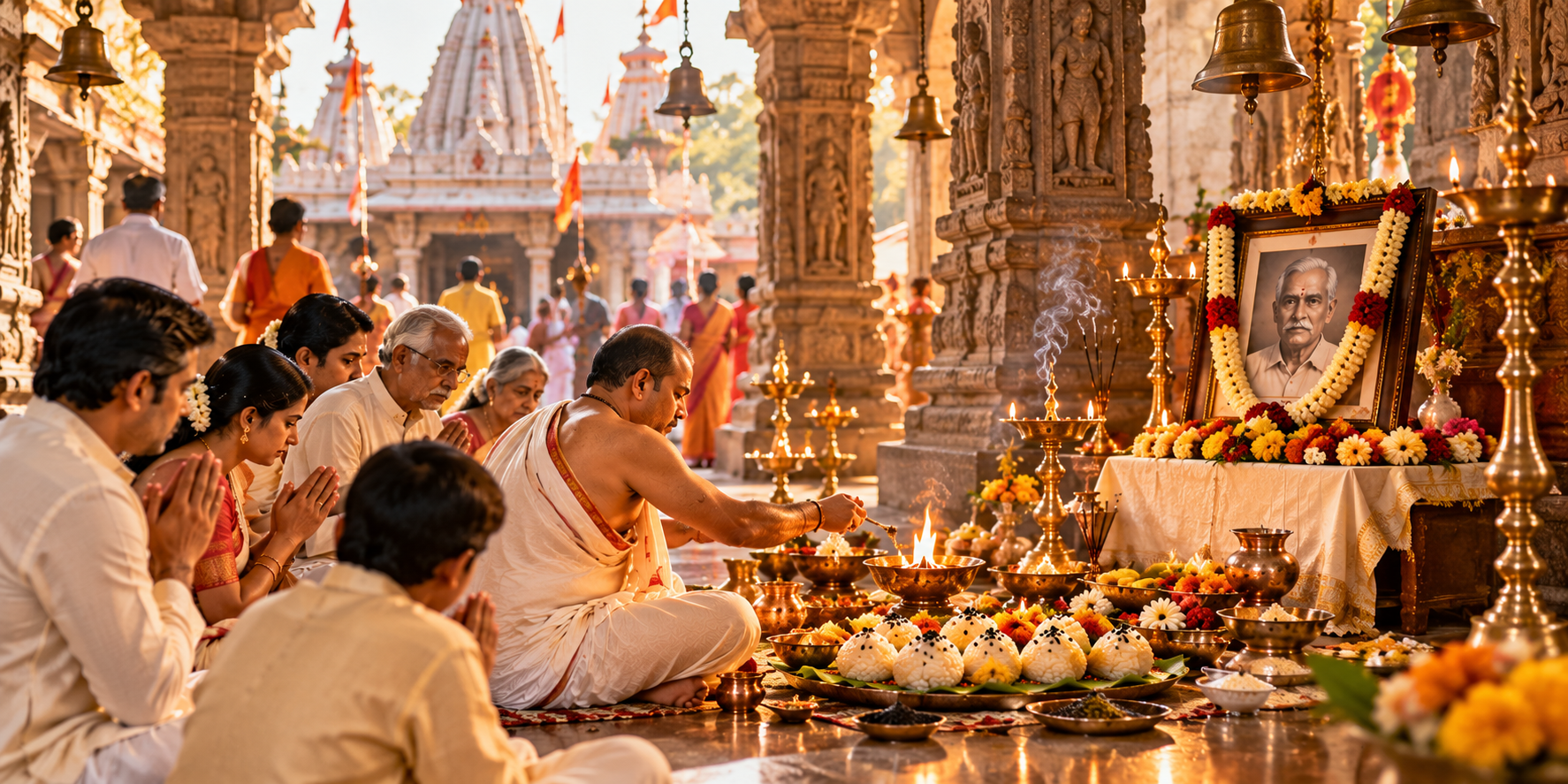
A sampradaya is a lineage of teaching and practice, such as Smarta, Sri Vaishnava, Madhva, Gaudiya Vaishnava, Pushtimarg, Shaiva Siddhanta and many others. A family's sampradaya can shape Shraddha as much as its region.
Ways sampradaya matters:
- Which texts and ritual manuals are authoritative, including which Veda's procedures the family follows.
- Mantras and sequence: the order of steps and the mantras used differ.
- Food rules: some Vaishnava traditions have specific rules about offering food first to the deity, about Ekadashi, or about particular ingredients.
- Views of the afterlife: philosophical differences influence how the rite is understood, though most traditions keep it.
- Priests: families usually follow priests of their own tradition.
Caste community and family lineage (kula) add further layers of custom, as do the family's village of origin and migration history.
This is why a single "correct" Shraddha does not exist. When in doubt, ask elders which sampradaya and priestly tradition the family follows, and seek a priest who knows it.
20 of 20
Regional Shraddha Traditions FAQ: Why Customs Differ from Family to Family
Why does my family do it differently from my friend's family?
Region, calendar, sampradaya, community, priestly lineage and family history all shape customs. Differences are normal.
Which version is correct?
The one your family and priest follow. Hindu tradition has long accepted deshachara (regional custom) and kulachara (family custom) as valid.
We are an inter-regional family. Whose customs do we follow?
Often the husband's family's customs for paternal ancestors, and the wife's for her natal ancestors, but many couples blend. Discuss openly.
Our family lost its traditions after migrating. How do we restart?
Ask elders on both sides, contact a priest from your region, and start simply. See creating an annual tradition.
Is Pitru Paksha observed in Kerala?
Yes, but Karkidaka Vavu (July to August) is the main ancestral day.
What is Kanagat?
A North Indian name for Pitru Paksha, from Kanyagata, the sun in Kanya (Virgo).
Frequently asked questions
What is Pitru Paksha called in different regions?
Shraadh or Kanagat in North India, Mahalaya Paksha in Bengal, Odisha and the South, Peddala Amavasya for its final day in Andhra Pradesh and Telangana, and Sorha Shraddha in Nepal.
How is Mahalaya observed in Bengal?
With pre-dawn tarpan for ancestors on river ghats and the Mahishasura Mardini radio broadcast, marking both the end of Pitri Paksha and the start of Devi Paksha leading to Durga Puja.
What is Karkidaka Vavu?
Kerala's main ancestral day, the new moon of the Malayalam month Karkidakam in July to August, when bali tharpanam is performed at rivers, beaches and temples.
What is Sanjhi?
A folk art custom of Rajasthan, Braj, Haryana and Malwa in which girls make images of the goddess Sanjhi on walls during Pitru Paksha and sing Sanjhi songs.
Why do Shraddha customs differ between families?
Because of differences in region, calendar system, sampradaya, caste community, priestly lineage and family history. Tradition accepts regional and family custom as valid.
What is hiranya shraddha?
A form of Shraddha, common in South India, in which uncooked provisions and dakshina are given to a priest instead of cooking and serving a full meal.