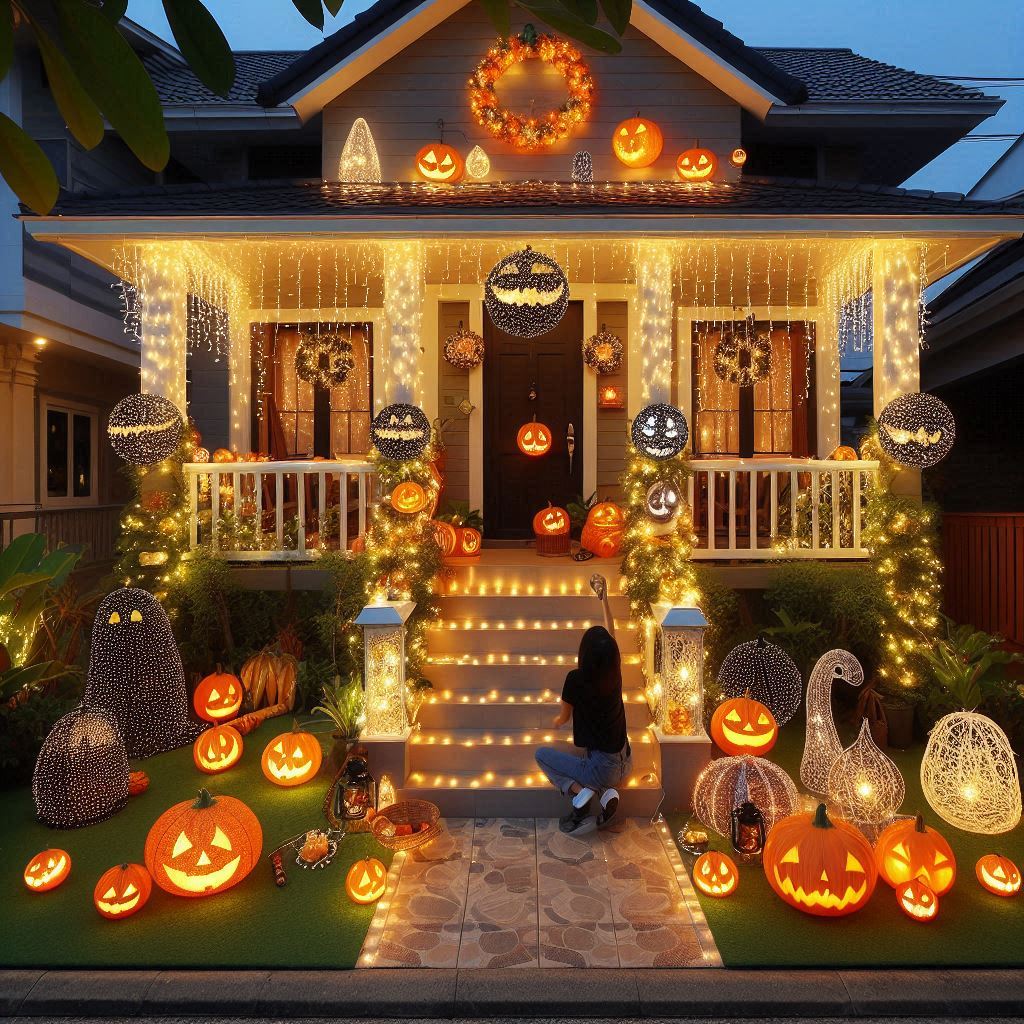
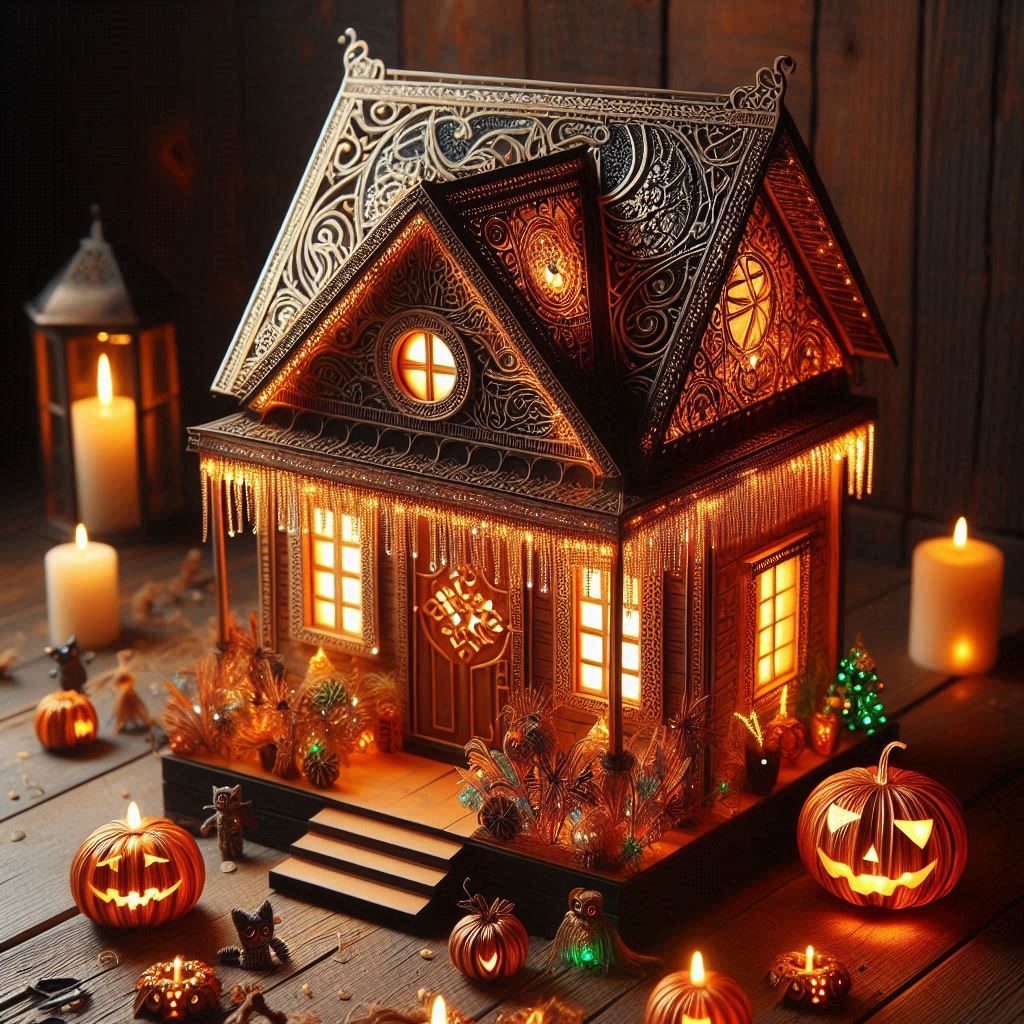
Warm light traces the doorway in this image, while garlands, lamps, and a bright patterned design gather around the entrance. The effect is less about a single ornament than about the home’s whole expression. It seems to be saying that someone is expected, that the evening matters, and that the ordinary threshold has become part of a celebration.
For households that enjoy both Diwali and Halloween during the autumn season, this illuminated welcome offers a beautiful point of connection. Each occasion has its own identity, while the pleasure of receiving friends can run through both.
The doorway as the heart of a celebration
The arched entrance gives the image a strong center, and the lights emphasize its shape without hiding the architecture. Floral accents soften the outline, while the patterned design near the steps adds a second point of interest. Warm tones make the whole scene feel generous and intimate, even though the decoration is richly layered.
Diwali is widely known as a festival of lights, with celebrations and practices that vary among communities and households. The image’s luminous character fits naturally within that festive language. Its appeal in a broader autumn setting comes from the same visible qualities: warmth, color, anticipation, and a home whose entrance has been given special attention for the people about to arrive.
Related guidance: Smithsonian National Museum of Asian Art: Diwali
An imagined season of different happy evenings
Imagine a home that holds several autumn gatherings, each with its own atmosphere. On one evening, friends arrive to share a Diwali celebration and admire the glowing entrance. On another, cheerful pumpkins appear nearby and familiar neighbors arrive in imaginative Halloween costumes. The doorway has witnessed different stories, but the welcome remains recognizable.
In this imagined household, the season is remembered through small arrivals: someone carrying a thoughtful gift, a child showing off a hat, an old friend pausing beneath the lights before ringing the bell. The celebrations do not need to become the same event to enrich one another’s memories. The home is the connecting thread, holding the warmth of each evening in a place everyone recognizes.
A festive entrance with changing personalities
The artwork could inspire a finished seasonal entrance where a warm illuminated outline remains a familiar feature while different occasions bring their own decorative character. A Diwali setting might have floral richness and a beautiful welcoming pattern. A Halloween evening might bring expressive pumpkins, a playful ghost, or a touch of autumn orange against the same inviting architecture.
The appeal lies in continuity without sameness. Guests could recognize the home’s hospitality even as the mood changes from one gathering to the next. This is a particularly personal kind of decorating inspiration: the house becomes a setting for the family’s real interests and celebrations, rather than a single image that has to explain an entire season at once.
A greeting carried by light
As a seasonal card, the illuminated doorway expresses a warm wish that travels easily between friends. It suggests welcome, happiness at home, and the anticipation of seeing one another again. The image can support a message for a festive autumn gathering without requiring every recipient to interpret the details in exactly the same way.
For a Halloween invitation, its warmth could accompany a celebration centered on friendship and bright pumpkin smiles. For a Diwali greeting, the luminous entrance belongs naturally to a wish for a joyful celebration. In either case, the most moving sentiment is the feeling of a home opening gladly to its guests.
May your home shine with welcome and your autumn evenings be rich with happy company. Wishing you festive light, warm memories, and many reasons to open the door with a smile.